Opening reception: Singing Water Stone
Thu 22 Jan 2026 7PM


22 January – 5 March 2026
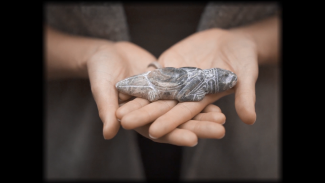
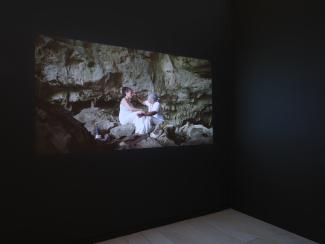
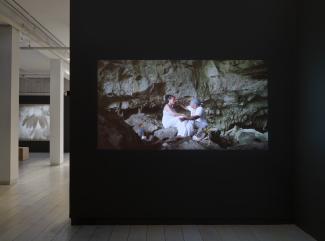
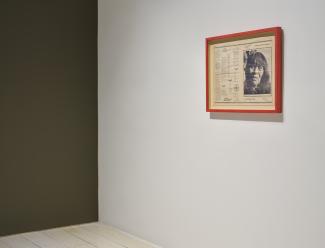
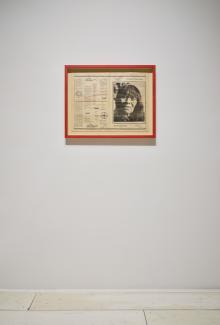
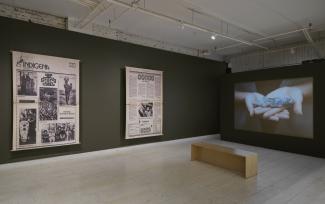
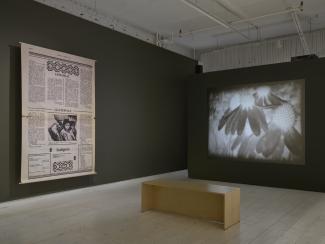
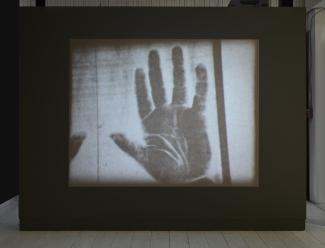
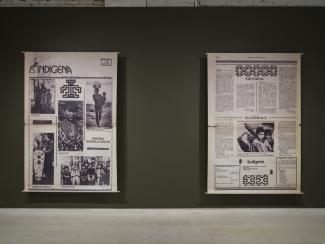
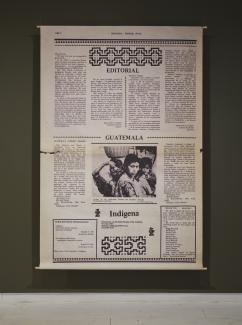
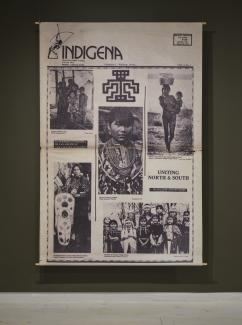
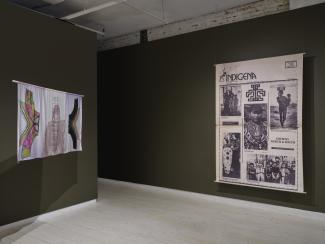
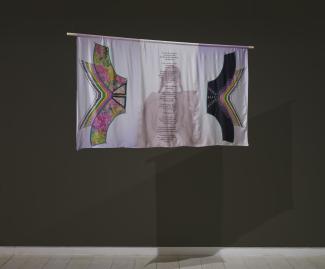
Singing Water Stone illuminates a maternal lineage of Indigenous resistance and re-presencing from the furthest extents of colonial erasure. This constellation of images features original works by artist Siku Allooloo alongside archival enlargements from the historic newspaper founded by her late mother in the 1970s, building upon her legacy as a groundbreaking Taíno activist and journalist. Spirit Emulsion – an experimental short filmed on Super 8 and developed by hand with plant medicines – connects earth to cosmos as flowers portray family love and ancestral sovereignty extending into the future. With Interface, a poem printed on silk, Allooloo reaches into the afterlife to connect with her Inuit grandmother, invoking ancestral love and connection as protection from colonial violence. A production still from her current work in progress (a feature documentary titled Indígena) shows the artist, six months pregnant, being ceremoniously adorned in a cave where Taíno have sought refuge from hurricanes and made offerings to the spirit world since time immemorial. Borrowing from the artist’s Taíno name, Singing Water Stone reflects the continuous struggle for liberation and rebirth that flows between mothers and daughters, across borders, by way of sacred homelands and the spirit world, spiraling endlessly throughout time.
Siku Allooloo (Inuk/Haitian/Taíno) is an award-winning interdisciplinary artist, writer, and filmmaker. Her poetic, sensorial work weaves the intimate and intangible with land-based practice and family archives to dismantle colonialism and re-presence ancestral trajectories. Her work has been shown at the Whitney Museum of American Art, BlackStar Film Festival, DOXA, Winnipeg Art Gallery-Qaumajuq, Musée des Beaux-Arts de Montréal, and the Belkin. Her debut short film, SPIRIT EMULSION, screened at the 2024 Whitney Biennial and Dakar Bienniale exhibitions, The National Art Gallery, and The Flaherty. Siku is currently in production on her first documentary feature, INDÍGENA (supported by Sundance Institute, Telefilm, and the Indigenous Screen Office, among others).
Feature image: Still from Spirit Emulsion, 2022, courtesy of the artist.
Installation photos courtesy Rachel Topham Photography.
*
With gratitude as guests, Access is located on the unceded territories of the xʷməθkwəy̓əm (Musqueam), Skwxwú7mesh (Squamish), and Səl̓ílwətaʔ/Selilwitulh (Tsleil-Waututh) Nations.
*
Access gratefully acknowledges the ongoing support of the following funders as well as our committed family of donors, members, and volunteers, for enabling this organization to remain vigorous and connected to the communities we support.